
Off-Road 4x4 Wheel Alignment
Custom alignments for all modified vehicles utilizing the latest laser alignment technology. This is especially crucial for off-road enthusiasts who have installed lift kits or other suspension modifications, as even minor changes in ride height can significantly impact alignment.
Why is a 4×4 Alignment Necessary?
There are several reasons why an alignment is essential for your vehicle. If you’ve upgraded or altered your suspension, an alignment will ensure optimal tire life and proper handling. This is especially crucial for off-road enthusiasts who have installed lift kits or other suspension modifications, as even minor changes in ride height can significantly impact alignment.
If you’re experiencing poor handling, such as pulling to one side or difficulty maintaining a straight line, a 4×4 alignment can correct these issues. This will enhance your driving experience, making your vehicle safer and more enjoyable to operate. Here at Adventure Motors, we rely on state-of-the-art alignment equipment and perform our services with the latest tools, ensuring precision and reliability.
What Are the Steps of a 4×4 Alignment?
A 4×4 alignment typically includes several key steps. First, our technician will check the tire pressure to ensure it is at the recommended level. Next, they will inspect all steering and suspension components for wear. Finally, the technician installs wheel targets and performs a “rolling compensation.” During this procedure, our specialized alignment machine accurately measures caster, camber, and toe of each wheel, as well as thrust angle.
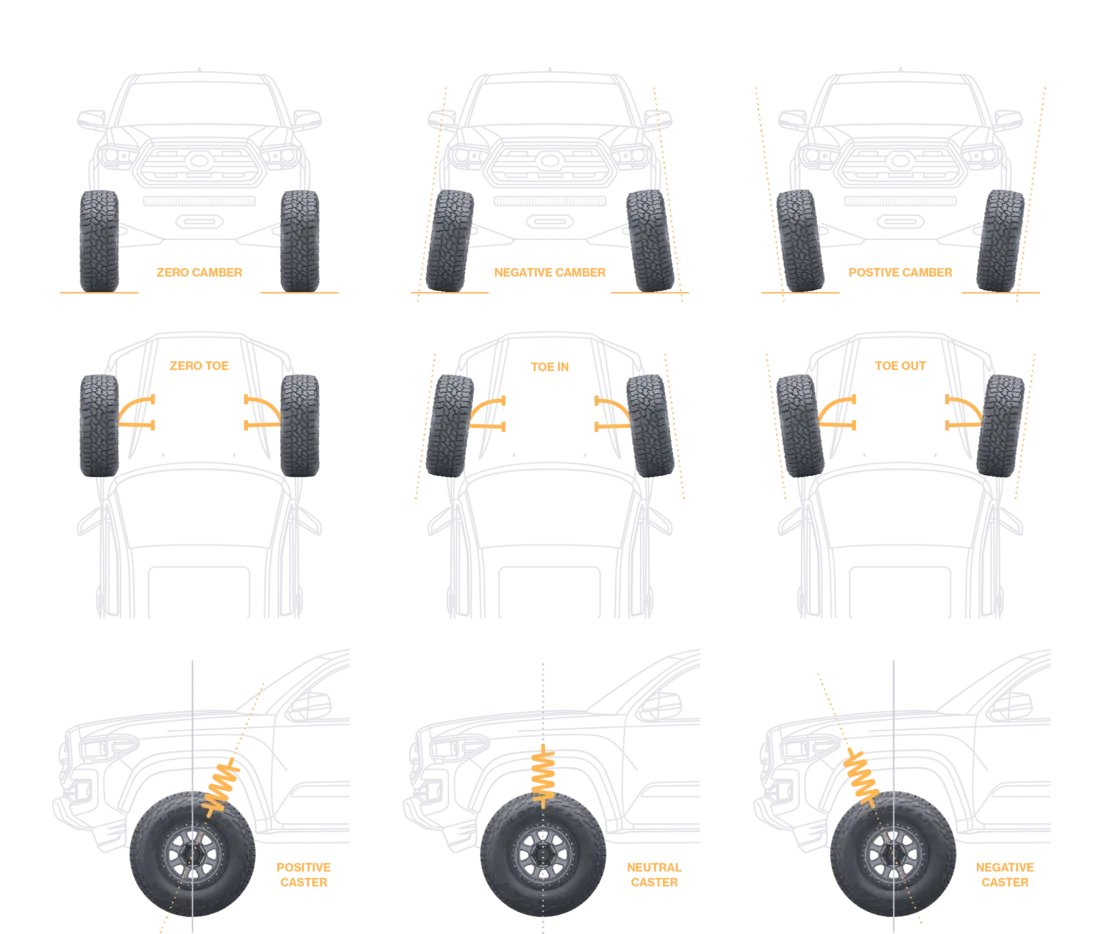
Understanding Caster, Camber & Toe
Toe
This is the angle at which the wheels point in relation to the vehicle’s centerline, crucial for ensuring the vehicle does not wander when steering. On vehicles with a solid rear axle, toe is adjusted only on the front wheels.
Camber
This is the inward or outward tilt of the tire when viewed from the front. This value should not always land in the standard manufacturer recommended settings depending on how extensively the suspension is modified. We also take into consideration what driving characteristics and performance is desired.
Caster
This refers to the steering pivot when viewed from the side. It should never be zero degrees, as this angle allows the steering wheel to naturally return to center after turning. Positive caster means the top of the pivot leans toward the rear, while negative caster means it leans toward the front. With a lifted vehicle on larger tires, factory caster values will usually give you poor driving characteristics and rubbing due to the low positive caster numbers.
How to Achieve Perfect Alignment Specs for a Lifted Rig
Now that we’ve covered the essentials of a 4×4 alignment, let’s discuss how it relates to vehicles with modified suspensions. Generally, the goal is to achieve the alignment specifications that will provide a straight and true driving experience as well as correct angles so as to not cause excessive tire wear. Often, specialty adjustable components like control arms, track bars, ball joints, and cam bolts are necessary to provide additional adjustments beyond what standard components offer when dealing with modified suspension.
Conclusion
A 4×4 alignment is an essential maintenance task for Jeep and truck owners who want to ensure their vehicles are performing at their best. Regular alignments can improve your vehicle’s performance and safety, as well as extend tire life. If you have any questions about when to have your 4×4 alignment done or what to expect during the process, visit our alignment services page or contact us directly!
Frequently Asked Questions
Why do lifted trucks need a special alignment?
Lifting a truck changes caster, camber, and toe. A shop that understands lifted geometry can correct caster and dial in the alignment so the truck drives straight and tires last.
Get your lifted rig aligned right.